
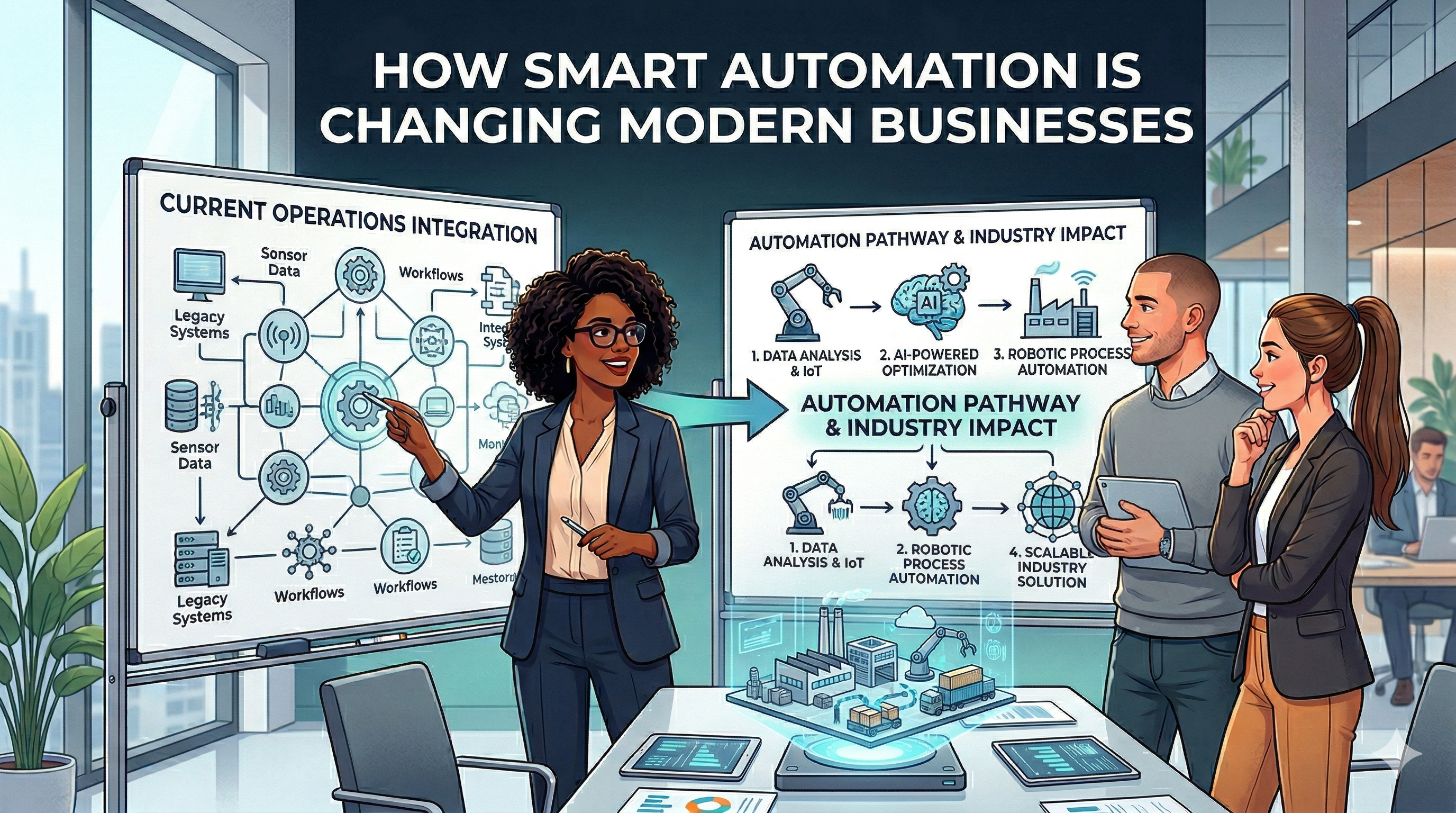
How Smart Automation Is Changing Modern Businesses
Automation is no longer just about machines doing repetitive tasks—it’s about intelligence driving smarter decisions. Businesses today are not just working faster; they’re working smarter. The real transformation lies in how automation and communication come together to reshape the modern workplace.
The Evolution of Smart Automation
The conversation around How Smart Automation Is Changing Modern Businesses has shifted dramatically in recent years. What once focused on basic process automation has evolved into intelligent systems powered by AI, data analytics, and machine learning.
Modern Automation & Industry Solutions now enable businesses to:
- Predict trends and customer behavior
- Automate complex workflows
- Enhance accuracy and reduce operational risks
From manufacturing to finance, automation is becoming the backbone of efficiency and innovation.
Beyond Technology: The Role of Communication
While automation brings powerful capabilities, its success depends heavily on how it is communicated within an organization.
This is where The Secret to Building Trust Through Strategic Communication becomes critical. Employees need to understand not just what is changing, but why it matters.
To successfully implement automation, leaders must:
- Turn Complex Ideas into Clear Business Messages
- Address employee concerns proactively
- Create transparency around goals and outcomes
Without this clarity, even the most advanced systems can face resistance.
Real-World Impact of Smart Automation
Let’s look at how smart automation is making a difference across industries:
1. Manufacturing
Automation has revolutionized production lines with robotics and predictive maintenance systems. However, Simplifying Industrial Solutions Through Better Communication ensures that workers can effectively operate and collaborate with these technologies.
2. Customer Service
AI-powered chatbots and CRM systems help businesses respond faster and more accurately. But teams must understand how to interpret and act on automated insights.
3. Finance and Operations
Automated reporting and forecasting tools reduce manual work and improve decision-making. This is a perfect example of Automation + Communication = Business Efficiency—when teams understand the data, they can act on it confidently.
Bridging the Gap with Training and Development
Technology alone isn’t enough—people need the right skills to leverage it. This is where structured learning plays a vital role.
Building a Future-Ready Workforce
Organizations must invest in:
- Core Corporate Training to build foundational knowledge
- Corporate training programs that integrate automation and communication skills
- Employee development training to foster adaptability
A Professional training & development company can help design these programs to align with evolving business needs.
Leadership in the Age of Automation
Leaders are at the forefront of change. Through Leadership development workshops, they can learn how to:
- Communicate complex transformations clearly
- Inspire confidence in teams
- Drive adoption of new technologies
Strong leadership ensures that automation initiatives are not just implemented—but embraced.
Flexible and Scalable Training Solutions
Modern businesses require flexible learning approaches, including:
- On-site corporate training for hands-on experience
- Virtual training solutions for remote teams
- Support from Workplace training providers offering industry-specific expertise
Additionally, Customized training solutions allow organizations to tailor learning programs based on their unique challenges and goals.
Communication: The Missing Link in Automation Success
Many organizations invest heavily in technology but overlook communication. This often leads to underutilized systems and disengaged employees.
To avoid this, businesses must focus on:
- Clear messaging around automation benefits
- Continuous learning and support
- Open channels for feedback
This approach reinforces the idea that Future-Ready Businesses Start with the Right Communication Strategy.
Industry Trends Shaping the Future
According to Training Industry – trends industrial automation, several key trends are shaping the future of business:
- Increased integration of AI and machine learning
- Greater emphasis on human-machine collaboration
- Continuous upskilling and reskilling of employees
These trends highlight the growing importance of combining technology with effective communication and training.
Practical Strategies for Businesses
To fully harness the power of smart automation, consider these actionable steps:
1. Start with Clear Communication
Explain the purpose and benefits of automation initiatives.
2. Focus on Employee Involvement
Encourage participation and feedback during implementation.
3. Invest in Continuous Learning
Leverage Corporate training programs and Employee development training to keep skills updated.
4. Align Technology with Business Goals
Ensure automation supports overall strategy and objectives.
5. Simplify Messaging
Always aim to Turn Complex Ideas into Clear Business Messages for better understanding and adoption.
Conclusion: Smarter Businesses, Stronger Foundations
Smart automation is transforming the way businesses operate, compete, and grow. But its true potential is unlocked only when combined with clear communication and effective training.
Key takeaway: How Smart Automation Is Changing Modern Businesses is not just about technology—it’s about people, clarity, and strategy. When organizations embrace Automation + Communication = Business Efficiency and invest in the right training and communication frameworks, they create a future-ready business built on trust, innovation, and sustainable success.