
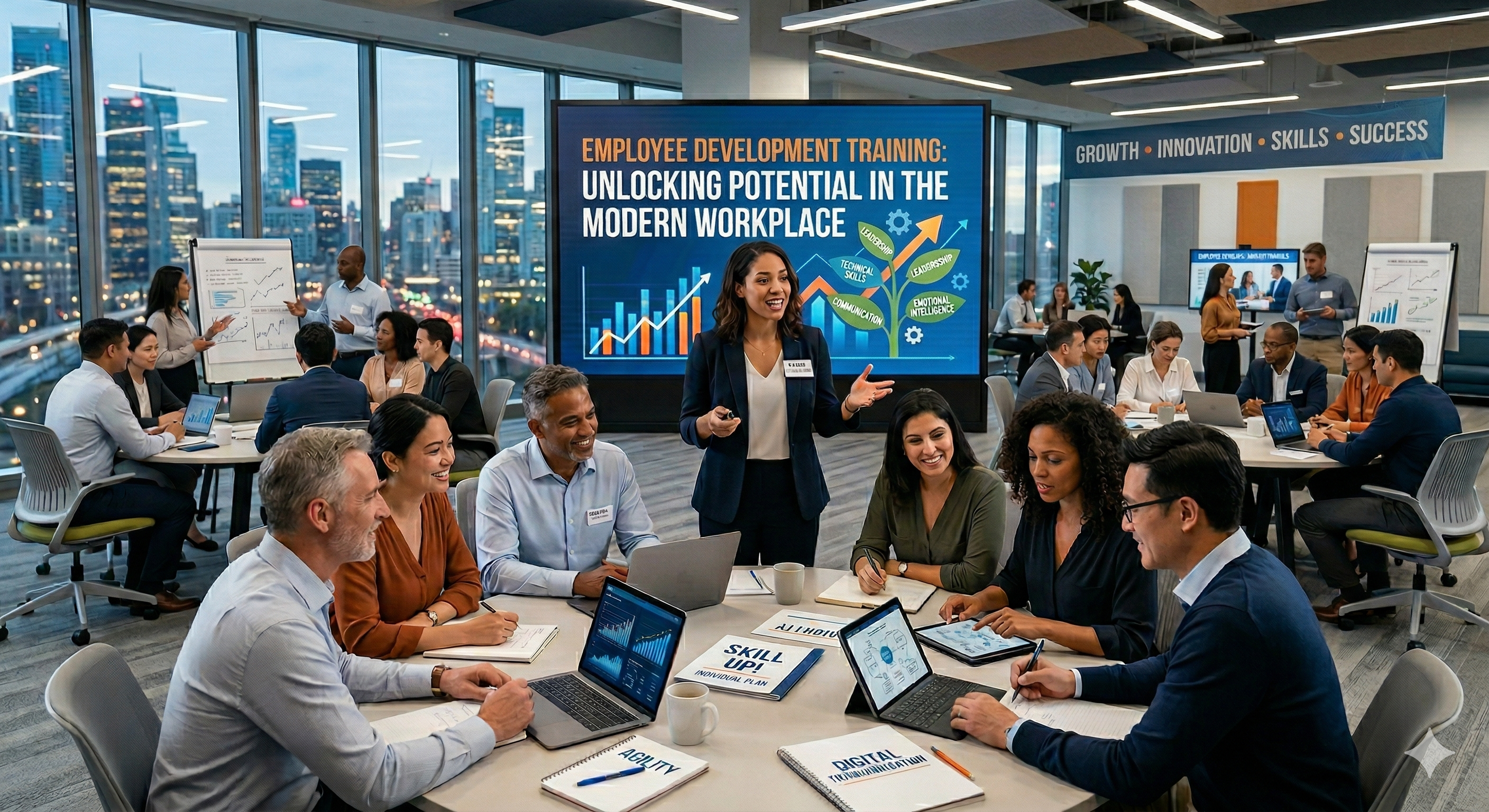
Employee Development Training: Unlocking Potential in the Modern Workplace
In today’s fast-paced business environment, talent is more than just a resource—it’s a competitive advantage. Organizations that invest in employee development training don’t just improve performance; they build a culture of growth, innovation, and long-term success.
The question is no longer whether to train employees, but how effectively you can do it.
What is Employee Development Training?
Employee development training refers to structured efforts by organizations to enhance the skills, knowledge, and capabilities of their workforce. It is a key component of Core Corporate Training, designed to prepare employees for current responsibilities and future roles.
Unlike basic training, development-focused programs emphasize continuous learning, career growth, and adaptability in an ever-changing business landscape.
Why Employee Development Training Matters
Businesses today face rapid technological advancements, evolving job roles, and increased competition. This makes strong corporate training programs essential for staying relevant.
Key Benefits:
- Improved performance: Employees gain the skills needed to excel in their roles.
- Higher engagement: People feel valued when companies invest in their growth.
- Career progression: Training prepares employees for leadership and advanced roles.
- Organizational agility: Teams adapt faster to change and innovation.
Practical Example:
A manufacturing company embracing training industry – trends industrial automation can train employees to work alongside automated systems, increasing efficiency while reducing operational risks.
Types of Employee Development Training
1. Leadership Development Workshops
Future-ready organizations focus on building leaders from within. Leadership development workshops equip employees with skills like decision-making, emotional intelligence, and strategic thinking.
Insight:
An employee promoted to a managerial role can benefit from leadership training to effectively guide teams, resolve conflicts, and improve productivity.
2. On-Site Corporate Training
On-site corporate training provides hands-on learning within the workplace, tailored to specific organizational needs.
Advantages:
- Real-time application of skills
- Team-based learning environment
- Immediate feedback and improvement
Example:
A retail company may conduct on-site sessions to train employees on customer experience strategies, directly improving service quality.
3. Virtual Training Solutions
As remote work grows, virtual training solutions have become a vital part of modern learning strategies.
Benefits:
- Flexible and accessible
- Cost-effective for large teams
- Ideal for global organizations
Example:
A multinational firm can deliver consistent training modules across different regions using virtual platforms, ensuring uniform skill development.
The Role of Professional Training Providers
Collaborating with a professional training & development company can significantly enhance training effectiveness. These experts bring structured methodologies, experienced trainers, and industry-specific insights.
What to Look For:
- Proven track record
- Customizable learning modules
- Use of modern tools and technologies
Reliable workplace training providers ensure that training programs align with organizational goals and deliver measurable outcomes.
Customized Training Solutions: A Game Changer
Every organization has unique challenges, which is why customized training solutions are critical. Generic programs often fail to address specific skill gaps, while tailored solutions deliver targeted results.
Example:
A financial services firm may develop customized training on compliance and risk management, while a tech company might focus on emerging software skills.
Benefits of Customization:
- Increased relevance and engagement
- Better knowledge retention
- Direct alignment with business needs
Emerging Trends in Employee Development Training
The future of training is being shaped by innovation and technology. The training industry – trends industrial automation is influencing how organizations approach learning and development.
Key Trends:
1. Digital Learning Platforms
Interactive platforms enhance engagement and accessibility.
2. Microlearning
Short, focused lessons that fit into busy schedules.
3. Data-Driven Training
Analytics help track progress and optimize learning outcomes.
4. Blended Learning Models
Combining on-site corporate training with virtual training solutions for maximum impact.
Practical Strategies for Effective Employee Development
To maximize the benefits of employee development training, organizations should adopt a strategic approach:
Align Training with Business Goals
Ensure training initiatives support overall company objectives.
Foster a Learning Culture
Encourage continuous improvement and curiosity among employees.
Measure Training Effectiveness
Track performance metrics and ROI to refine programs.
Partner with Experts
Work with experienced workplace training providers to design impactful learning experiences.
Conclusion: Investing in People, Driving Success
In a rapidly evolving workplace, employee development training is no longer optional—it’s essential. By integrating it into Core Corporate Training, leveraging effective corporate training programs, and adopting customized training solutions, organizations can unlock the full potential of their workforce.
Key Takeaway:
When companies invest in their employees’ growth, they don’t just build better teams—they build stronger, more resilient businesses ready for the future.